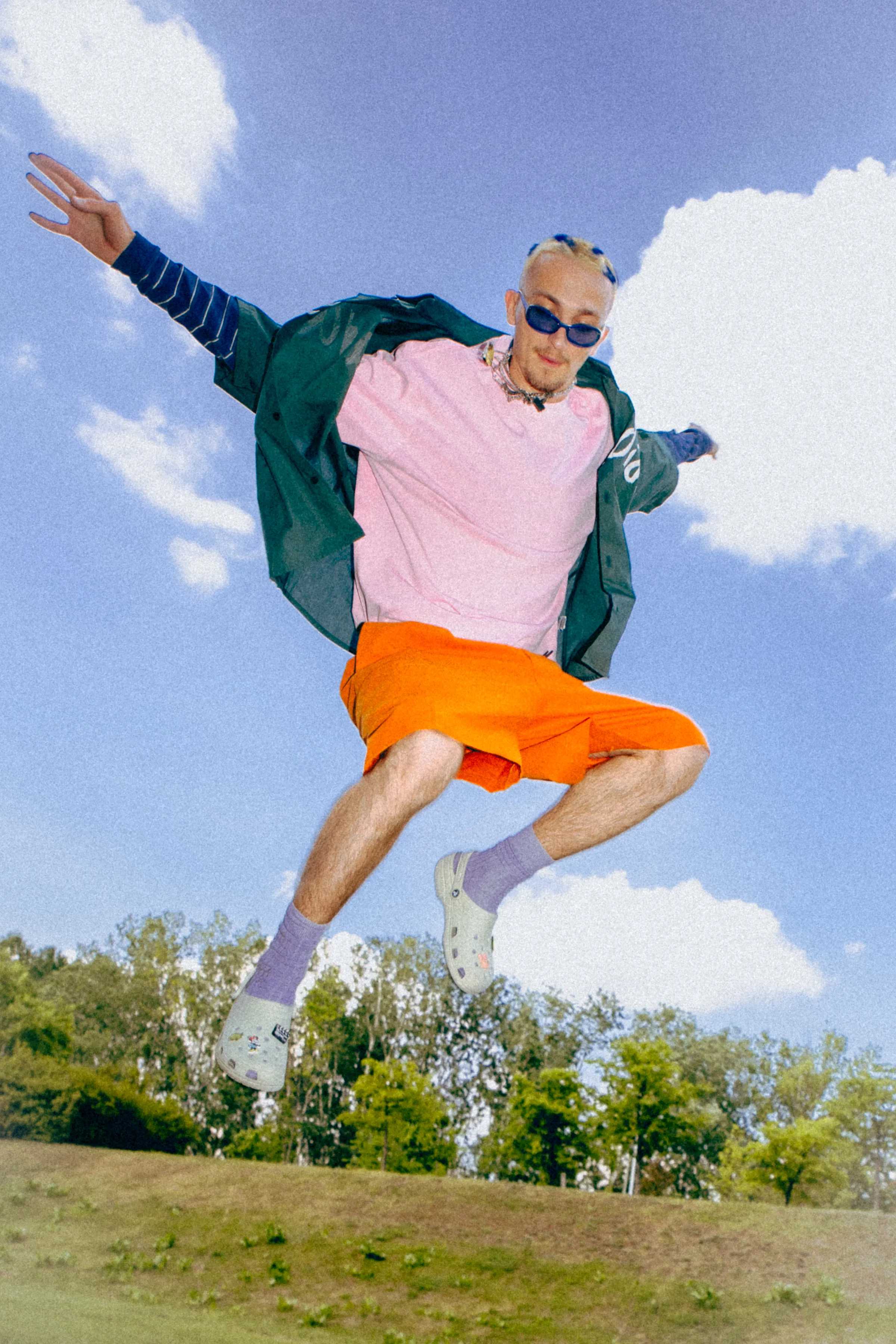
"I’m just a guy who goes to a grocery store and rides trolleys"
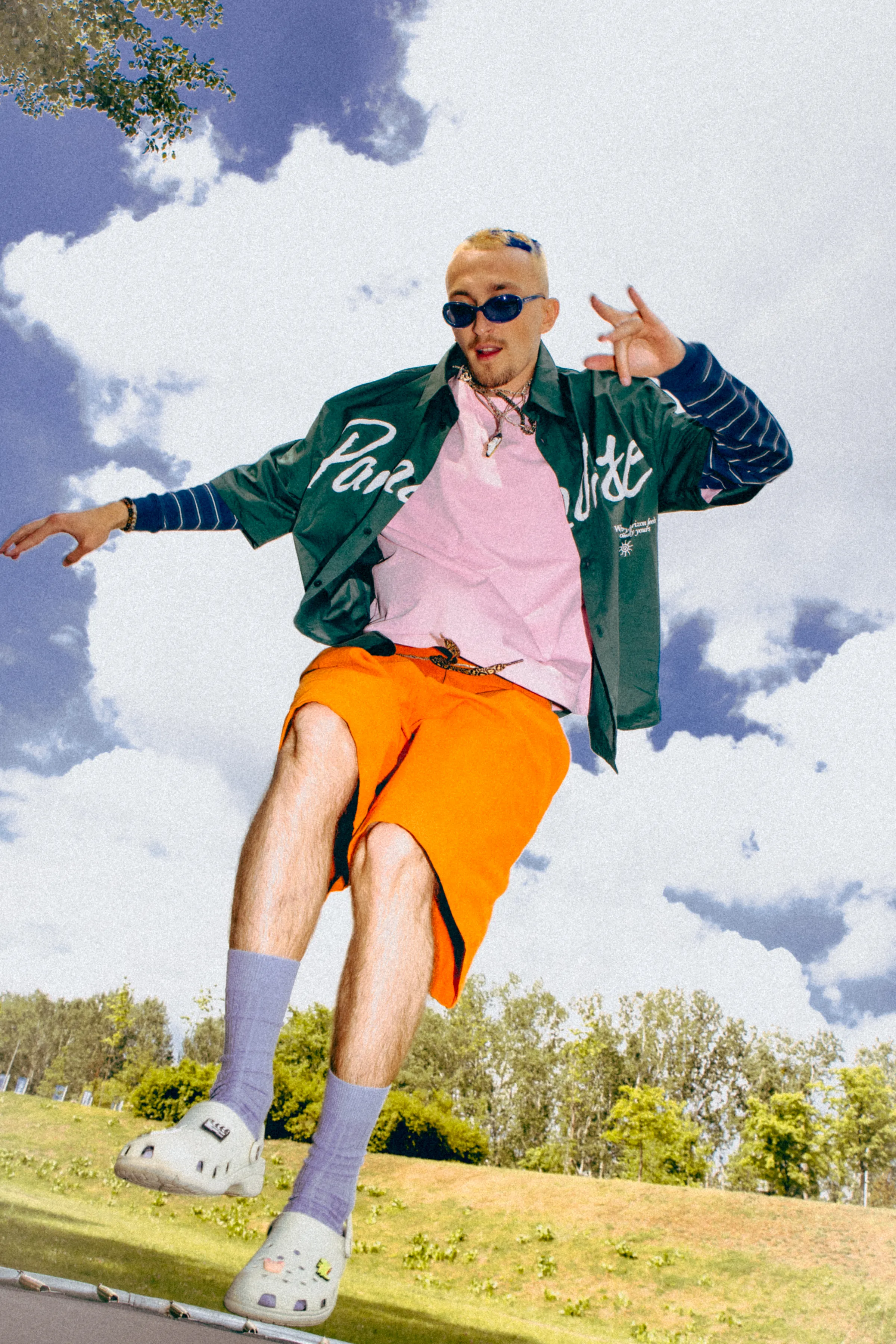
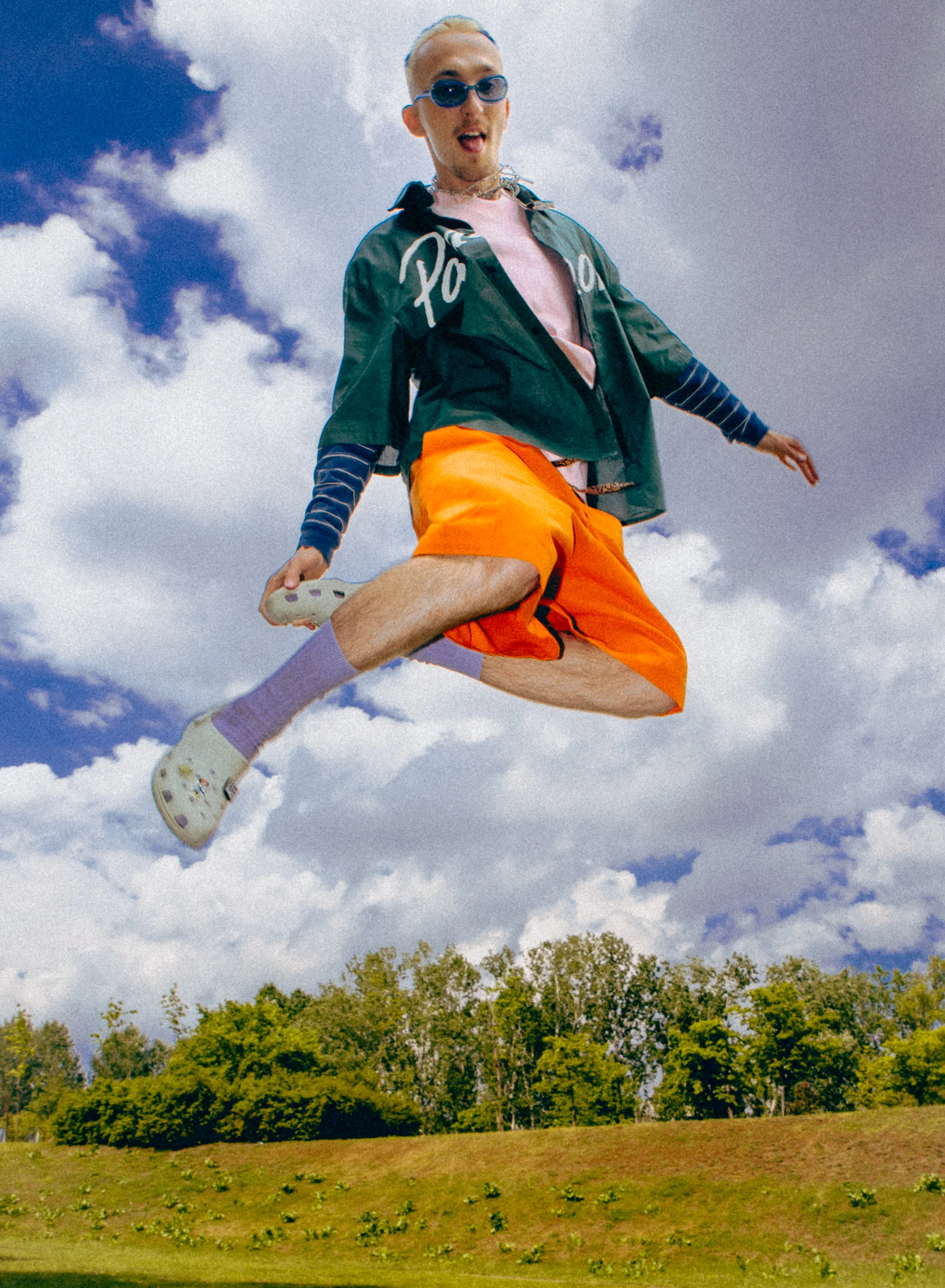
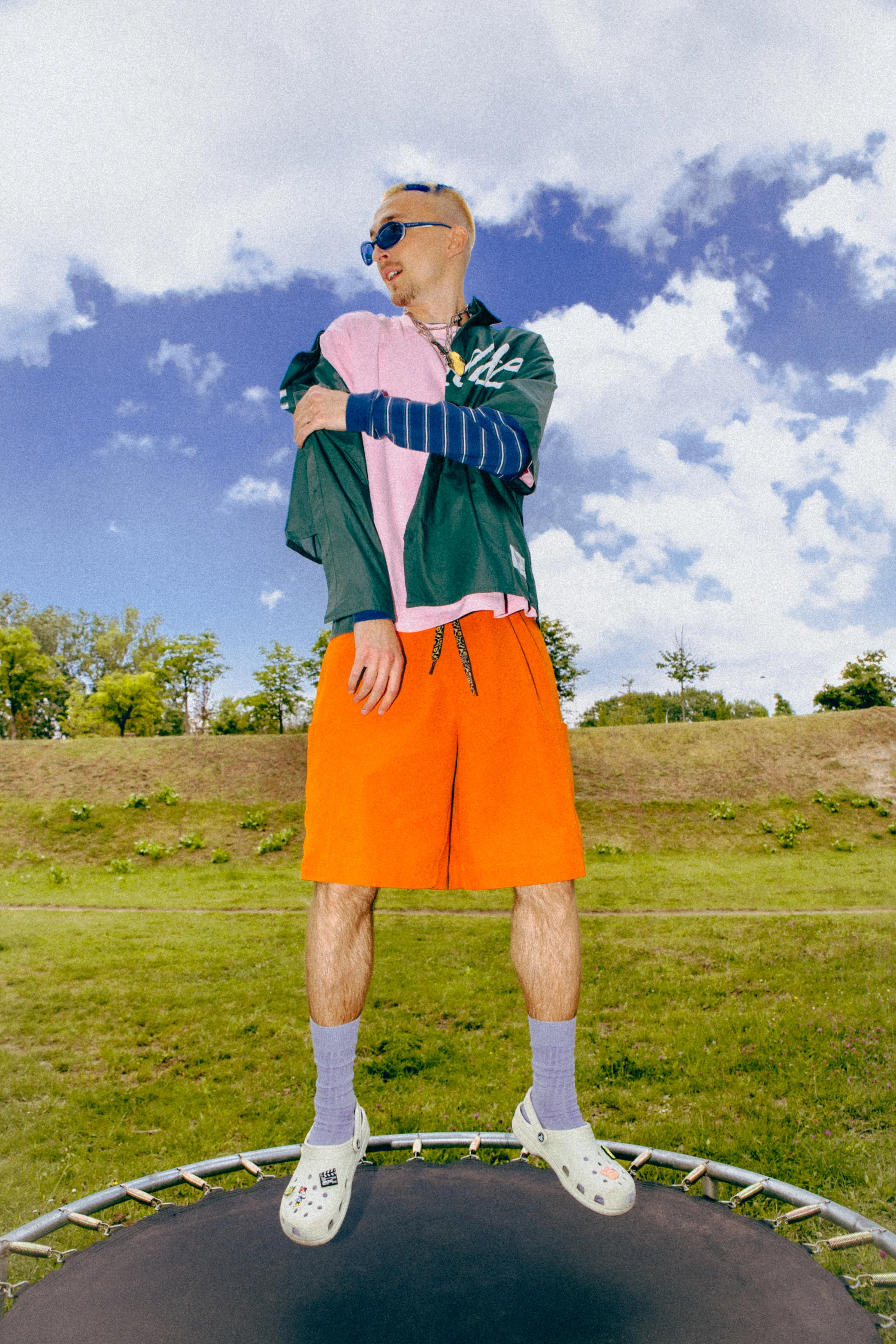
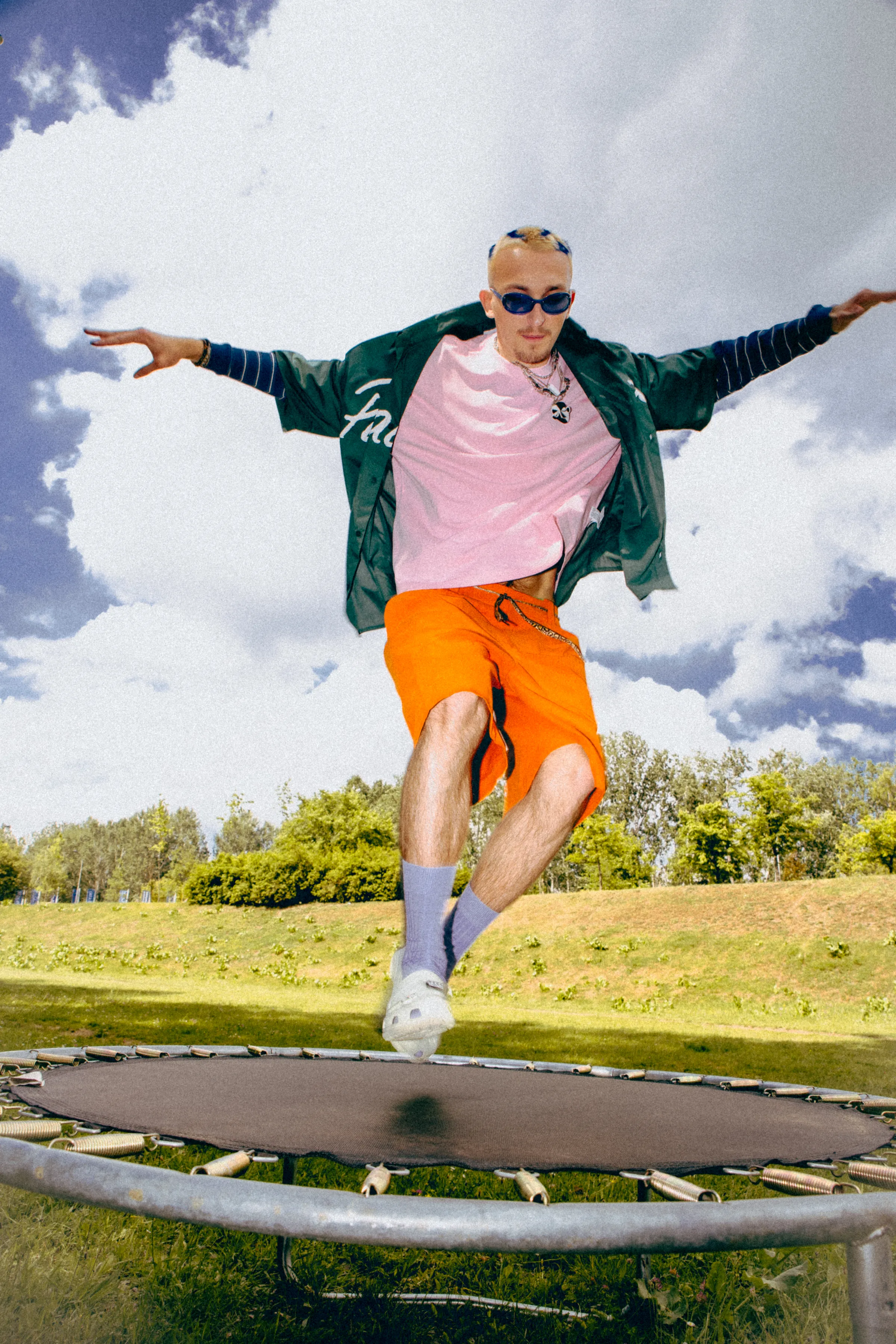
lightowy interview and photo shoot
"I wrote my first track when I was 14"
My friend and I got together and rapped over the dumbest beat in the world.
Interview - lightowy - June 27, 2026
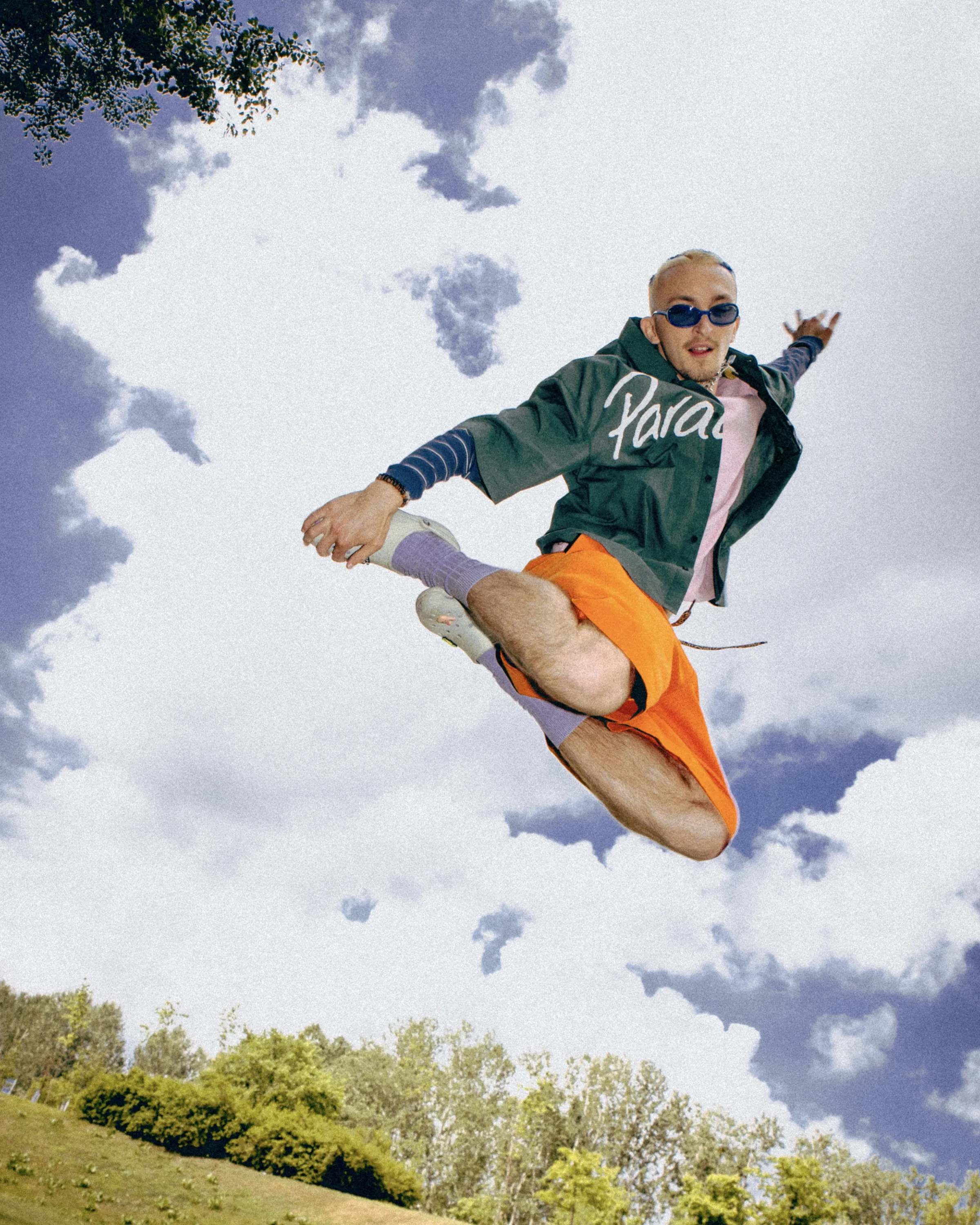
A little over two months ago, Lyokha Lightowy gathered 400 people for the presentation of his new album ‘Pahlyad Unutr’ (A Look Inside). An album that was released only two weeks after the presentation itself. To create a show with elements of theater and performance, the artist and his team sent out commercial proposals to Belarusian businesses and received so many donations that he had to pay taxes.
KLIK spoke with Lightowy about inner modesty, the influence of a philosophy degree on his creativity, and found out how the artist is similar to Paznyaks.
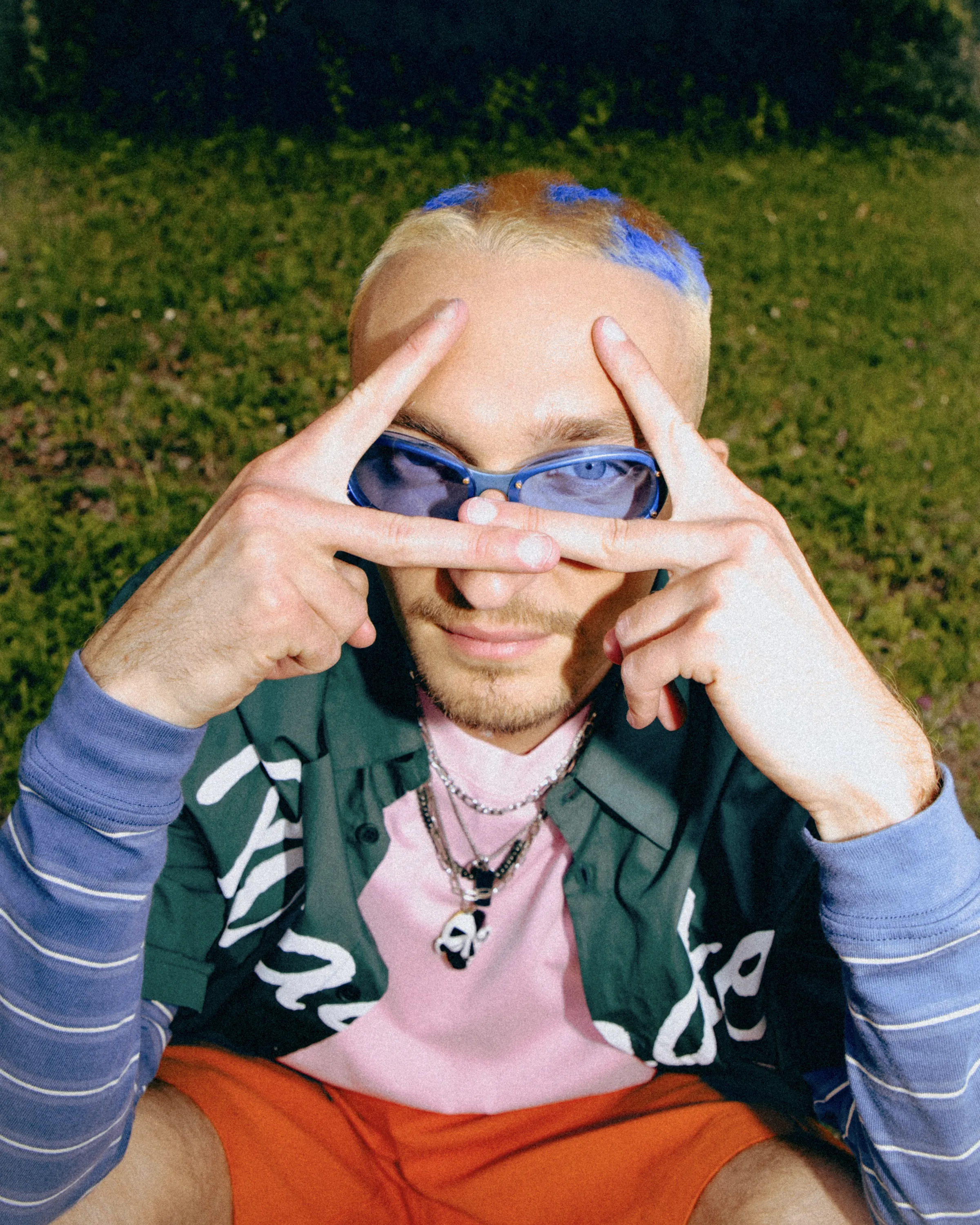
Philosopher, Vagabond, and Linguist
– Who is Lightowy in everyday life?
– Right now, I'm an unemployed vagabond. As most of my musician friends say, my main profession is music. At the same time, there are things I do to make money for this music. For the last eight months or so, I worked as a copywriter. I've been shooting video and photo for eight years – I graduated from a photo academy.
Now I'm looking for a job. Maybe this interview will help somehow. I love languages and speak English, German, and Polish relatively fluently, so I’d like to use these skills somehow. Other than that, I’m just a regular guy who goes to a grocery store and rides trolleys. The only notable fact about me is that I haven't eaten meat for 9 years.
– Why "lightowy" anyway?
– Lightowy is a meme in a way. As a skater, I skated my whole life and had a camera with a fish-eye lens to shoot videos in classic skate style. There weren't many guys like that in the scene. And since I was young and couldn't say no, a lot of people used my free services. At one point, I just got tired of it. I deleted my old VK page (a Russian social media) with my real name and created a new one, randomly signing up as "Lyokha Lightowy". And it stuck.
I wrote my first track when I was 14. My friend and I got together and rapped over the dumbest beat in the world. That recording is still hanging out somewhere on VK. I started writing in Belarusian a year later, at 15. My first Belarusian-language track was called ‘Pazitywny Vaib’ (Positive Vibe), and its final version came out in 2018.
Now, Belarusian is the main language in my music. Writing in Russian isn't as interesting – the purely human factor kicks in there. It's hard for me to imagine a Russian rhyme that hasn't already been thought of before me (unless it's a completely new loanword). But in the Belarusian language, there is still a sense of novelty. That’s why I believe the Belarusian language gives me freedom.
"I’m just a guy who goes to a grocery store and rides trolleys"
lightowy
– Who influenced you as a rap artist?
– My absolute favorite is The Notorious B.I.G. I probably know all the songs from his first album by heart. A Tribe Called Quest and Wu-Tang. In general, the whole gangsta rap scene: Ice Cube, Eazy-E–I went hard on that vibe. From the more niche but cool groups, I can name Scientists of Sound and Dappie the Conqueror.
Deleuze, Foucault, Buddhism, and Introversion
– Your new album ‘Pahlyad Unutr’ sounds intimate and reflective. What was the main trigger for writing this material?
– You know, I can't point to one specific milestone on this journey. It seems to me that the turning point was the period when I first strongly believed in myself as a musician.
On the other hand, it happened through serious internal efforts. By nature, I am a very modest and insecure person. Parallel to my creative growth, all these doubts were also gaining weight and acting as a counterweight.
Probably the strongest push was that I went on a long enough trip to be able to reflect and write away from everyday hustle and bustle. I remember coming back to Minsk and immediately writing the track Panoptikum (Panopticon). This also coincided with the time I broke up with my girlfriend. There were a lot of emotions, so personal experiences and the social context existed in parallel.
A couple of months after Panoptikum, I realized that I had accumulated much more material than I thought. So I decided: I’ll put the album together until it forms a cohesive whole. As a result, the release was written over two years in completely different states and contexts.
– How do the light and deep personas coexist in you? Which one wins in the end?
– I treat music performatively, so I pay very close attention to what I write. For example, I wrote the track Svetlae Nefiltravanae (Light Unfiltered) as a certain affirmation – about what I actually want. And when I was preparing Pahlyad Unutr for release, I was afraid that this album would work the same way. And it did.
It seems to me that this release very clearly revived my initial modesty and insecurity. Pahlyad Unutr re-revealed my own introversion to me, which I am still in right now. On a conscious level, I’d like to go back to the vibe of Lightowy Kurs, so now I’m working on a third EP. I'm in a bit of a battle between these two parts, and it feels like the light is winning for now.
– What heritage and cultural codes influenced the creation of the album?
– I’m a philosopher by education, so philosophy heavily influenced the album. The track Panoptikum is an obvious nod to Michel Foucault. When I talk about will, those are Nietzschean currents. My favorite philosopher is Gilles Deleuze. He influenced my creativity in general in terms of decisiveness.
Deleuze is a social constructivist, and I am a person who considers himself modest. The "Lightowy" project is precisely a musical staging of the kind of person I would like to be.
Plus, of course, fiction literature had an impact. Especially the writer Roman Mikhailov. He was born in Latvia. I feel very close to his aesthetics. David Lynch, in terms of understanding the world, is number one for me. If we talk about Belarusian literature and poetry, it’s Ales Razanaw, Ihar Kulikow, and in a way, Andrey Khadanovich with his alliterations.
As for the religious-adjacent components – it’s not foreign to me to mention the name of God. I haven't fully processed this moment yet, but the word "God" often pops up in the lyrics. And Buddhism, of course: I was hooked on it for a while. When the track Neprayawleny (Unmanifested) was being recorded, Andrey Kurs (the beatmaker) for some reason extended the outro of the track by two bars. I was thinking about what to add there, and decided to insert my favorite Buddhist mantra.
– If you had to keep only one track from the album that fully explains its essence, what would it be?
– If we're talking strictly about the essence, then Panoptikum. But if we're talking about what I simply like the most, I’d take Neba nad Menskam (The Sky Over Minsk), remake it, and keep it. It's the only track from the album that I can re-listen to.
– Why would you remake it?
– Neba nad Menskam is an attempt at a live sound; within the album, it sounds okay, I like it. But to work with live instrumentation further, there are things to improve, including the vocals.
Taxes on Donations and Commercial Proposals for Big Business
– Your promo campaign for the album presentation and concert was noticeable and large-scale. Tell us how you did it and who was behind it?
– When I was just thinking about the future album, I knew for sure: I wanted to present it in a special way. Not just do a concert, but create a full-fledged performance. I was pushed into this by the past Kalyadny Fest (Christmas Festival). That was my first big performance; about 300 people gathered below the stage. I felt that energy and started playing with the idea in my head. Then I met with the festival organizer and asked if she mind helping to do something big. She agreed and told me what was needed. Viika–my girlfriend, who does management – and I ran the numbers and thought it was realistic. That's how the work started.
At the start, we were quoted scary numbers that spooked us quite a bit. Everything came out to about $3,500. And that scary amount forced us to actively look for sponsors and collaborations. For the first few weeks, Viika and I wrote literally everywhere, created a commercial proposal, and sent it out to everyone. "A-100", "Hippo", "Krasny Pishchevik"–basically everyone. In the end, we were supported by the online hypermarket 21vek.by. Later, Red Bull joined in. I started to feel real support.
Then an even bigger miracle happened. I decided to try to collect donations. I won't even name the amount people sent in one day – for me, it was something unbelievable! I even paid taxes on these donations so there wouldn't be any extra questions.
This whole process really boosted my self-belief. There was enough money to finish everything on time. Moreover, in the end, the initial price quoted by the organizer turned out to be four times less. On top of that, projects close to us in spirit got involved: "Sami Supolka", "Zabi Zyabu", Locals coffee shop, BYN Records, PharmSoundLab, "Holst Bai", the LSTR Adziennie brand, and the guys from Jungle Brewery even brewed a special beer for the release. In a way, this album and concert belong to the whole Belarusian scene.
– Why was it fundamental for you to go exactly this route for the album presentation?
– It was important for me to create a moment. I really love theater and the theme of rituals. The most important thing was to launch the album, to give it a unique first life. To create a live entrance for the listeners, a missable experience they would look back on with a sense of nostalgia. I understood that after the album's release, I wouldn't be able to repeat this in the form of a tour. This is a purely artistic approach.
"I perceive 'VYKLIK' as a festival"
lightowy
– Let's talk about the "VYKLIK" contest. You became the winner and won a contract with a major distributor, ONErpm. How did you find out about this, and what did you feel at that moment?
– I was fucking shocked, literally. I was in Poznań at a concert, picked up the phone, and they said, "Congratulations!". Nadya (the artist Lightowy won the contest with) was also in Poznań then, I yelled to her, "Come here quick!". I called Andrey Kurs, he was asleep. I said, "Andrukha, we won!", and on the screen, you could only see his mustache, nose, teeth, and his sleepy, "What?..."
It was very pleasant. I don't fully understand yet what lies ahead for us. But we came with a demo that we truly believed in. Andrey immediately said, "There's a beat. I sent it to Max Korzh, Korzh didn't reply." In the end, we submitted the application.
– Did you feel real competition during the contest, or was it more of a space for solidarity?
– I wrote on my social media that I perceive "VYKLIK" as a festival. And not even a music one, but like some kind of EXPO where each "company" showcases the best it managed to do. First and foremost, it's not about competition, although it was felt. Still, it’s hard to call it a fight, because the result depends on third parties.
– Why did you skip the contest last year and give your spot to Nadezhda? What guided you in this decision?
– There was some internal contradiction because the contest proposed content creation. And back then, I didn't quite agree with the editors' decision, because artists with just decent-quality applications moved forward.
It seems to me that our video was the only exception–we shot it in a garage in one take on a camera, without any processing. Because of this feeling of injustice, I didn't want to participate further and decided to give my spot to Nadezhda. True, later I was correctly corrected that according to the rules, you can't just pass your spot to someone else.
Something Like a Blitz
– What is comfort to you? How important is it when creating songs?
– Comfort is a very important category in my life. It is fundamentally important for me to write in comfort, at least relative comfort. For me, it's an opportunity to be myself without external chaos. Comfort is connected with peace, with the ability to breathe out and figure out with a cold head what is happening around you. I write best in the bathroom. The bathtub is the main indicator of comfort for me. When there is time to lie down and write a little text–that's the sweet spot. And, of course, social comfort within your environment is also very important.
– On a scale of 1 to 10, how tired are you of comparisons with Paznyaks?
– Zero. I just don't see what we can even be compared on; we are very different. But I love Paznyaks. It seems to me he writes rap from roughly the same mindset as I do in terms of being laid-back ("Lightowy"). Rap – especially Belarusian rap – is usually about anguish and suffering, but Paznyaks is always chilling. He knows his flaws and downsides, laughs at it, and doesn't prove anything to anyone. Even if he weren't Belarusian, I would most likely still listen to him.
– How would you describe the current state of Belarusian music in a single word or phrase?
– Cool. There are some hopes for this state. Something is definitely happening.
– Three things that make you happy?
– You understand that I am a philosopher, now I am going to weigh everything in my mind. You don't spare your time. Let it be love in the broad sense of the word, art, and peace.